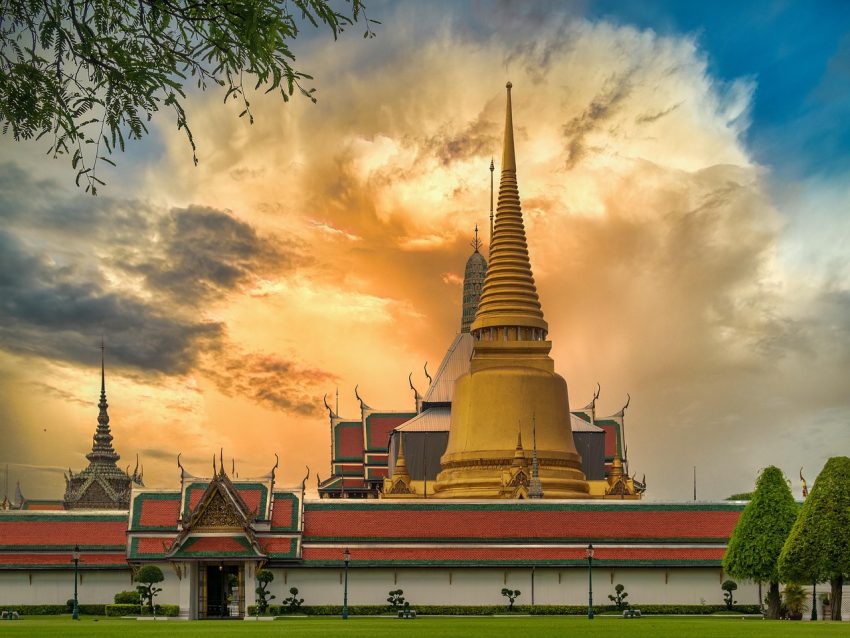
I arrived in Bangkok expecting to marvel at centuries-old temples and stand before the Emerald Buddha. Instead, I found myself in the middle of a royal mourning period that had quietly transformed one of Thailand’s most iconic landmarks. What began as a disappointing change of plans became an unexpected lesson in history, tradition, and the uncertainty surrounding the future of the Thai monarchy.
Anyone who has ever planned a trip to Thailand knows how important each individual temple is in regard to its culture, religion, politics and overall way of life. One of the highlights that many travelers look forward to is the visit to the Royal Temple in Bangkok, otherwise known as Wat Phra Kaew that houses the Emerald Buddha. I for one couldn’t wait to catch a glimpse of the statue carved from a single piece of green stone and gain a sense of peace or enlightenment that many others who have visited before shared.
Unfortunately, the universe had other plans with the death of one of the most respected members of the royal family, Princess Barjrakitiyabha, lovingly nicknamed “Princess Bha” or the “Prosecutor Princess” (for her legal background). Parts of the Grand Palace restricted visitor access or were closed during my three-day stay in Bangkok in order for the family and foreign dignitaries to have space for the royal funeral rites.
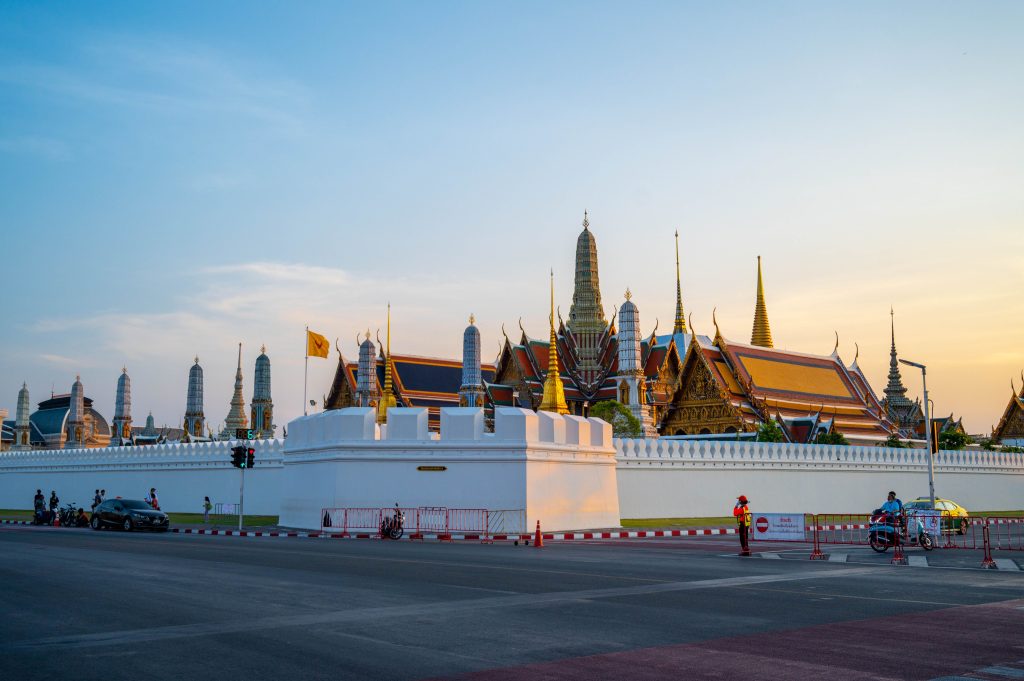
I won’t pretend I wasn’t disappointed. Seeing Wat Phra Kaew had been at the top of my Bangkok bucket list. My heart goes out to the Thai Royal family for their loss. Even though I missed my spiritual moment in awe of the Emerald Buddha, I did gain something more valuable: an introduction to Thailand’s monarchy, shrouded in mystery and questions about its future succession.
Before my time in Thailand, I knew as much about the Thai monarchy as I do about aeronautical engineering – nothing. With the fear of sounding totally ignorant, I had no idea that Thailand still had an operating monarch system until the news of the Princess’ death so that made me naturally curious to their current structure armed with questions.

King Maha Vajiralongkorn, also known as King Rama X ascended to the throne almost 10 years ago. He is the most recent king of the Chakri Dynasty that started back in 1782, so one could say they’ve been around the block. Like most monarchies, who would step up and take control over the throne in the event of the king’s passing has been an important part of maintaining continuity. That succession typically involves a direct offspring that my Thai Tour Director referred to as “blue blood” or a child born into the royal family (not a child from a girlfriend or a commoner, like myself).
King Rama X’s first marriage brought forth only one child. Princess Bha, a true royal member of the Chakri Dynasty. She would eventually become a lawyer, diplomat, military officer, and one of the most respected members of the royal family, but the princess was just that – a princess not a prince.
Historically, Thailand’s succession has favored male heirs, but Princess Bha’s education, military service, legal career, and public standing made many people see her as far more than “just another princess.”
The King’s first marriage, like many, eventually ended. He moved on to his second wife, a famous Thai actor and entertainer whom according to sources he was absolutely infatuated with even from a young age. Your classic romcom, “She’s always been the one and now I have to run to her.”
King Rama X and his second wife had four sons together, seemingly securing a male line of succession and allowing Princess Bha to continue serving the Thai people in a different capacity. But like all good things, they come to an end.
In 1996, the King publicly accused his wife of disloyalty. There were talks of adultery, abuse of power for personal gain, fraud, you name it. And I’m not talking about a few whispers here and there. I’m saying that the King straight aired that dirty laundry out for everyone. It was so bad that she collected herself and the future heirs of the monarchy, hopped on a plane and said goodbye because she was scared of what would happen next.
King Rama X allowed it and matched her with disowning the whole lot of them, the sons who once appeared to secure the dynasty’s future included. Stripped of their titles, exiled from Thailand, and was completely done.
I’m skipping over about three seasons’ worth of royal family drama here, but this is the version relevant to understanding why Princess Bha mattered. I also know that on occasion the family, both ex wife and sons included, have been back to visit Thailand but my knowledge on that content is limited.
Here’s where Princess Bha’s role in the story becomes especially significant. Remember, she’s already a badass and the people love her, but pair that with the fact that now she’s really one of the few remaining members of the royal family who could succeed the king. Would it have been better if she were a male? Based on history, for sure, but many royal watchers viewed her as one of the strongest potential successors and assumed she would carry on the legacy.
When Princess Bha collapsed in December 2022 and never regained consciousness, a question immediately came forward that had largely stayed in the background for years. If she didn’t get better or survive, who would succeed King Rama X?
To be clear, she was not the publicly designated heir, just widely viewed as the strongest potential successor. To be crystal clear, King Rama X has never publicly designated any heir – male or female.
Officially, nobody seems eager to speculate. Unofficially, everyone has a theory.
The king’s son, Prince Dipangkorn, is often mentioned as the most likely successor. Others point out that royal succession in Thailand has never been as straightforward as outsiders assume.
It’s been almost two weeks since Princess Bha’s death. There is an official 15-day mourning period, with ceremonies happening at the Royal Temple for the family, world leaders, and close friends. Because she was royalty, there will be an extended 100-day period of funeral prayers and royal rites. Yet at no point is the King expected to name an heir and it probably won’t happen any time soon.
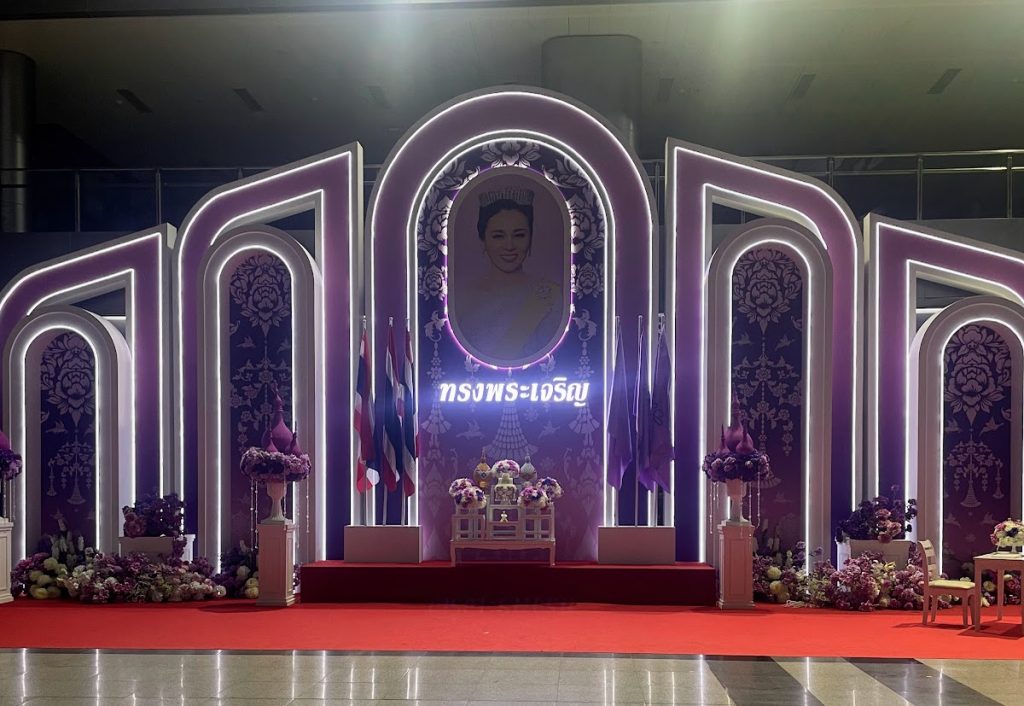
What was wild to me was the atmosphere.
Many people were in mourning and it wasn’t just confined to the Royal Palace. What struck me most wasn’t a funeral procession or crowds dressed in black. It was how her presence seemed to follow me through Bangkok. Large portraits of Princess Bha stood outside buildings, elaborate shrines appeared in public spaces, and even the airport displayed memorials honoring her life.
But you couldn’t even speculate who would take over the throne in public. In the conversations that I had while traveling through Bangkok, conversations about the monarchy ended almost as quickly as they began. Some of that silence felt rooted in respect. Some of it may have reflected Thailand’s strict laws surrounding discussion of the monarchy. Either way, it became clear that this wasn’t casual dinner conversation. For now the focus is mourning for their beloved Princess, rather than succession.

Travel has a funny way of reminding you that countries aren’t museums.
They’re living stories.
Every destination has its own joys, heartbreaks, celebrations, and moments of uncertainty happening whether tourists are there to witness them or not.
Sometimes you arrive expecting to learn about the past.
Instead, you accidentally witness history being written in real time.
About this essay
This is a personal travel essay based on my experience visiting Bangkok during Thailand’s royal mourning period following the death of Princess Bajrakitiyabha. Historical events are summarized to provide context for the story and are not intended as a comprehensive history of the Thai monarchy.
Further Reading & Sources
- Thai Princess Bajrakitiyabha dies after more than three years in coma (BBC, 2026)
- Thai king Maha Vajiralongkorn’s ex-wife in exile: 5 insights into Sujarinee Vivacharawongse’s life and legacy (South China Morning Post, 2019)
- Thai Bluebloods Must Work for a Living : Asia: Royal family is huge because of its history of polygamy. Their ranks include prime ministers, plumbers, movie stars and taxi drivers. (Los Angeles Times, 1995)
- Exclusive: Thai Princes Banished Again as Eldest Says ‘I Did Nothing Wrong’ (Time, 2025)
- My Thai tour director and conversations during my travels in Bangkok